What to protect
Patent & IP Help for First-Time Inventors
Getting your first US patent or other IP is confusing. FiledClaim provides plain-language guidance and helps you find a licensed patent or IP professional who fits your goals and language.
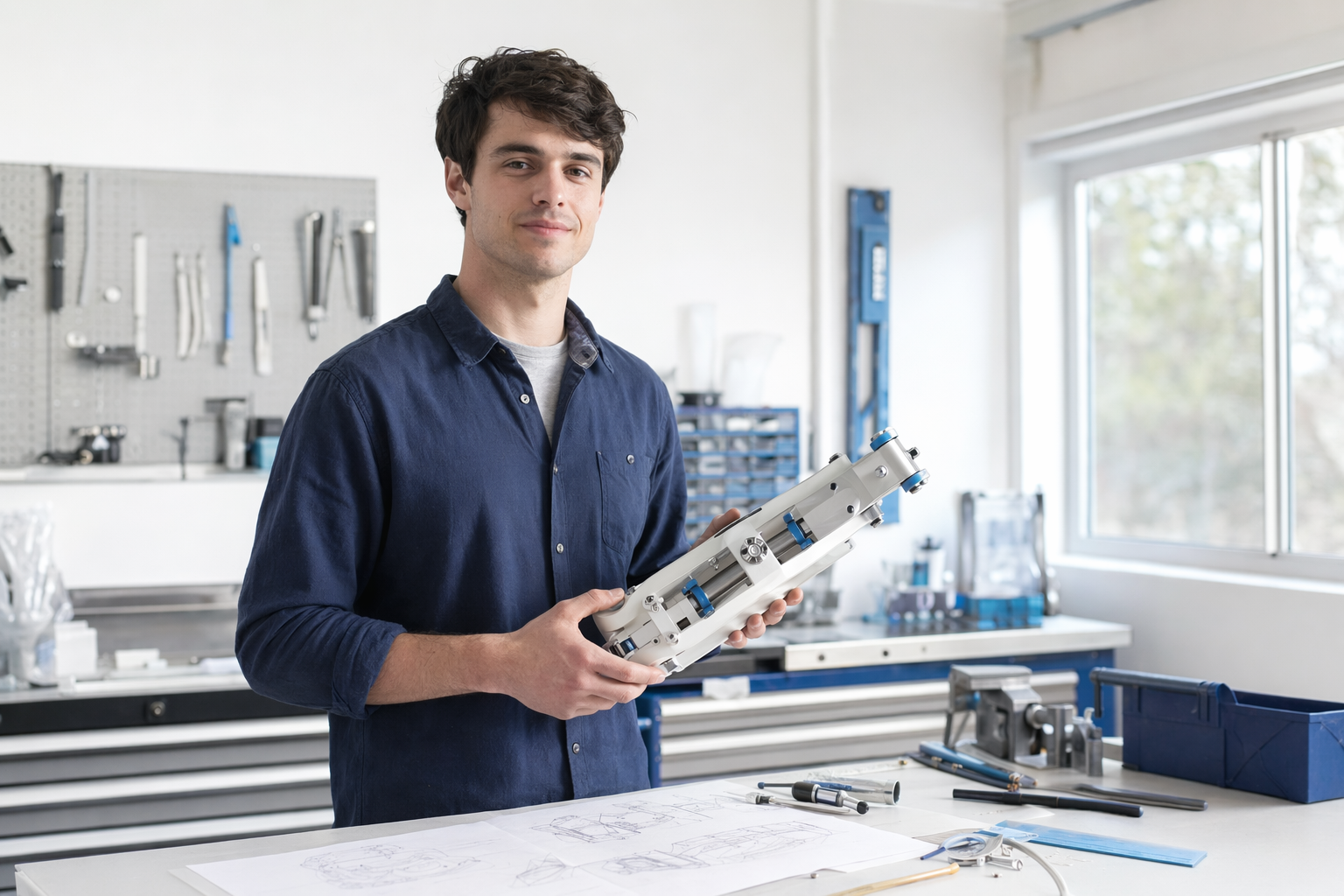
Start with the right “IP” for what you made
In the US, “intellectual property” (IP) can protect different kinds of work. Patents protect certain inventions. Trademarks protect brand names and logos. Copyright protects original creative works.
Many first-time inventors assume one type of protection fits everything. It often doesn’t. Your best next step depends on what you made (product, process, software, design, writing, artwork, brand), and what you want to protect.
If you’re unsure what category fits, start with our plain-language guides and then use our matching help to find a licensed professional for a quick, case-specific next step: Guides.
- A licensed professional can explain which IP type fits your goals and what the timeline usually looks like.
- You can ask high-level questions without sharing confidential, “secret” details.

Patents in plain language: the big picture
A patent is a legal document from the US government that can give an inventor certain rights for an invention that meets specific requirements. Most patent applications describe the invention in detail so others can understand it.
A key concept in patent law is the claim. A claim is a numbered statement that defines the legal boundaries of what the patent covers. Strong claims usually require careful drafting and clear support in the written description.
In the US, patent applications are often filed first as a provisional application (a “placeholder” that can establish an early filing date) and later as a non-provisional application (the formal application examined by the patent office). Not every invention should start with a provisional, but it’s common for time-sensitive projects.
- A provisional is not examined and typically is used to help establish a filing date.
- A non-provisional is examined, and the application can involve written responses called **office actions** from the USPTO.
Before you file: understand “prior art” and why it matters
To be patentable, an invention generally needs to be new and not obvious compared to what is already available. In patent practice, this existing information is often called prior art—for example, earlier patents, published applications, academic papers, product manuals, and public sales or public use.
You don’t have to become a patent researcher yourself, but it helps to know that “filing date” can matter. Also, public disclosure can affect your options. Because rules vary by case and timing, it’s important to get guidance early.
A licensed patent attorney or registered patent agent can help you understand what prior art may exist and how it could affect patentability and claim strategy. If you want a first step, you can explore our services and then get connected with a fit: Services.
- Prior art can include non-patent publications and public activity, not just patents.
- Early guidance can help you avoid costly missteps.
Trademarks and copyright: simpler than patents, but still specific
A trademark is used to identify the source of goods or services (for example, a brand name or logo). Trademark rights can come from actual use in commerce and, in many cases, registration. Filing a trademark application usually involves selecting the correct goods/services description and meeting technical requirements.
Copyright protects original creative works, like writings, artwork, and software code. Copyright is generally automatic upon creation, but registration can matter for enforcing rights. If you create content, branding materials, or software, a licensed IP professional can explain what to protect and what to document.
If you’re not sure whether your issue is patent-related, trademark-related, or copyright-related, start with our plain-language guides and then we help you find a licensed professional: Get matched.
- Trademark decisions often depend on how and where you plan to use your mark.
- Copyright questions often focus on authorship, originality, and evidence of creation.
How FiledClaim helps first-time inventors (without legal advice)
FiledClaim is a free service that provides plain-language education about US IP options and helps you find a licensed patent or IP professional who fits your situation and language. We are not a law firm, and we do not give legal advice.
When you contact us, we collect basic information: your name, email, and a short, non-confidential description of what you’re trying to protect. We do not request sensitive information like SSNs, ITINs, immigration status, or financial account details.
What you get is guidance and next-step support, not a guarantee of outcomes. A licensed professional will review your facts and explain the risks, costs, and possible paths for your case.
- We help you find a licensed professional who can answer questions for your specific situation.
- We keep the process focused on non-confidential details so you can talk safely.
What to prepare before your first conversation
Before you speak with an IP professional, it helps to organize a few basics. Write down what you invented or created, what problem it solves, and where it may be used. If you have a prototype or documentation, keep it organized.
It’s also useful to note your timeline: when you started, when you first publicly shared anything (if you did), and when you want to launch. This can affect which filing strategy makes sense.
For official rules and definitions, check the USPTO (for patents and trademarks) at [USPTO.gov](https://www.uspto.gov/) and Copyright Office information at [Copyright.gov](https://www.copyright.gov/). When you’re ready, you can review our services and get connected with a licensed professional here: Get matched.
- Bring dates (approximate is fine) about development and any public sharing.
- Bring product or project notes, diagrams, or summaries—avoid sharing trade secrets in initial outreach forms.
FiledClaim gives first-time inventors plain-language US IP guidance and helps you find a licensed patent or IP professional for your situation and language.
Common questions
Is FiledClaim a law firm or a patent attorney?
No. FiledClaim is not a law firm and does not provide legal advice. We provide education in plain language and help you find a licensed patent or IP professional who can review your situation.
Do I need a provisional or a non-provisional patent application?
It depends on your timeline, disclosure history, and the details of your invention. A licensed professional can explain whether a provisional makes sense and what it would cover, but there’s no one-size-fits-all answer.
What does “prior art” mean for my invention?
Prior art is information that existed before your filing date, such as earlier patents, publications, and sometimes public sales or public use. It can affect whether an invention may qualify for a patent.
Will you guarantee that I get a patent or that my trademark will register?
No. No reputable professional can guarantee that. The outcome depends on the facts in your case and the examination process. We can help you find licensed guidance, but we can’t promise results.
What information should I share with you to get started?
You can share your contact details and a short, non-confidential description of what you want to protect. Avoid sharing secret/confidential details on intake forms. A licensed professional can discuss deeper details during a proper conversation.
Where can I learn the official US rules?
For patents and trademarks, use the USPTO website at USPTO.gov. For copyright, use Copyright.gov. These sites explain definitions, filing requirements, and procedures.