Guides
DIY Patent Search vs Hiring a Pro
Choosing between a DIY patent search and hiring a pro can feel confusing. Here’s a plain-language comparison of what each path means for cost, risk, and protecting your idea in the US.
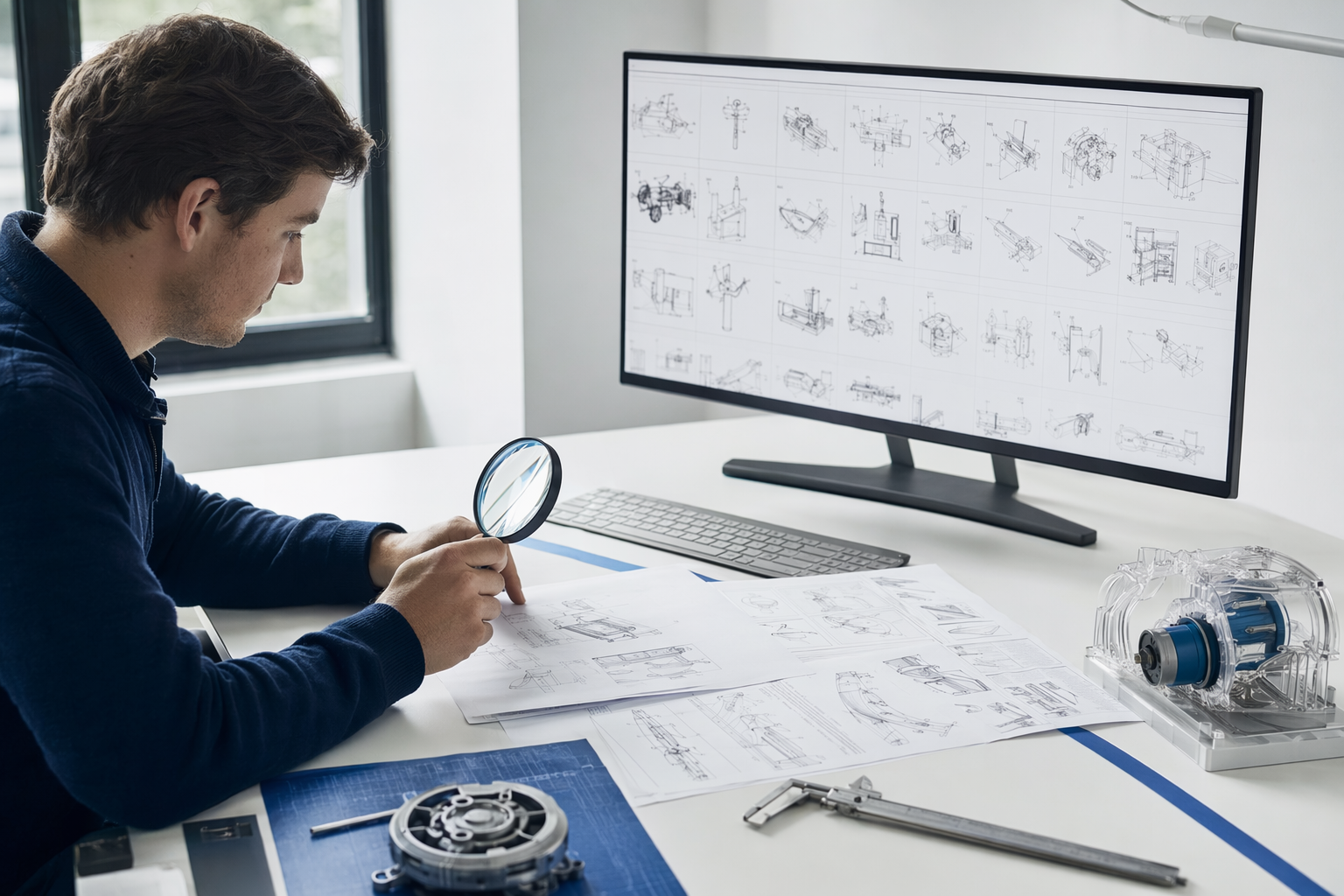
DIY patent search: what it is (and what it can’t do)
A DIY patent search is when you search public patent records yourself—often using keywords and classification codes—to see whether similar inventions already exist. This can help you understand the “landscape” around your idea.
In US practice, inventors often focus on “prior art,” which means earlier published information that can affect whether a patent application is considered novel. A DIY search may find obvious matches, but it can also miss close variations, synonyms, translation issues, and foreign-language documents.
You can learn a lot from searching. But DIY searches do not replace legal judgment about patentability, claim scope, or filing strategy. If your goal is a strong application, you usually need more than results from a search—you need how those results connect to your specific invention and planned claims.
Hiring a pro: what you typically get
Hiring a licensed patent professional (a patent attorney or a registered patent agent) can add structured analysis to your process. They can help you search more effectively, interpret results, and plan next steps.
A key difference is that a pro can connect the search to “claim” strategy. In patents, a claim is the specific legal statement of what you are asking to protect. The wording of claims can strongly affect what others could do without infringement and how the USPTO (United States Patent and Trademark Office) might view your application.
Pro help can also matter for documentation and process management. US patent applications use different forms and timing rules, including deciding between a “provisional application” and a “non-provisional application.” A provisional application is a filing that can establish an early filing date, while a non-provisional application is the main application that is examined by the USPTO.
Cost comparison: what each option often costs (in plain terms)
DIY searches can be low-cost in dollars because you’re using free tools and your own time. However, the real expense is time and effort—especially when you need to refine search terms, review documents, and translate complex results into practical decisions.
Hiring a pro usually costs more than DIY. Many professionals offer fixed-cost packages or clear flat-fee ranges for specific tasks (like search-and-analysis or helping with an application). The exact scope and price depend on the complexity of the technology and how much work is included.
At FiledClaim, we help you find a licensed patent professional by matching you with someone who fits your needs. This is a free service for you to use, and participating professionals typically pay a flat marketing fee to be seen.
Risk comparison: where DIY and pro help differ most
The main DIY risk is missing important prior art or misunderstanding what the documents actually mean. A search result that looks “similar” might be irrelevant legally, or a result that looks “different” might still be close enough to matter. Another risk is focusing on the wrong search strategy—like only using everyday keywords instead of the technical terms used in patents.
A second DIY risk is moving ahead with filing without clarity on scope. Many inventors discover later that their early draft of what they want to protect is not aligned with what they can realistically claim. In the US, the USPTO evaluates applications based on statutory requirements, and an application can receive an “office action,” which is an official message from the USPTO that may raise issues you must respond to.
Hiring a pro does not remove all uncertainty—there’s never a guarantee of an outcome. But pro work can reduce avoidable mistakes by improving the search process, helping interpret prior art, and supporting stronger application preparation.
What “good” looks like: deciding which path fits your situation
DIY can be a good starting point if your goal is early learning: you want to check whether you’re in a crowded area, understand common terminology, or identify potential competitors and research directions. DIY is also useful when you’re clarifying the invention concept before spending money.
Hiring a pro is often a better fit if you’re ready to make filing decisions, if your technology is complex, or if you need claim-level planning. It can also help if you’re working on a tight timeline (for example, approaching a public disclosure) and you want a careful approach to protecting your rights.
If you’re unsure, you can do a basic DIY search for context and still get professional help for interpretation and next steps. FiledClaim can help you find a licensed patent professional to discuss your situation through /get-matched/ and learn about options through /services/.
Next steps: a simple, US-focused workflow
1) Write a short, non-confidential description of your invention idea (what it does and how it works at a high level).
2) Do a preliminary search to learn the language of the field. You can use USPTO resources to start understanding relevant terms. For official guidance on the patent system, visit [USPTO.gov](https://www.uspto.gov/).
3) Decide what you need next: more search depth, claim strategy, or preparation for a provisional or non-provisional filing. If you want help finding a licensed professional, go to /get-matched/.
4) If you do move forward with filing, keep in mind that the USPTO examination process can include office actions. Planning for responses is part of risk management, not a sign of failure.
DIY searches can teach you the landscape, but hiring a licensed patent professional often reduces key risks by connecting search results to claim-level strategy and US filing decisions.
Common questions
Is a DIY patent search enough to know if I can get a patent?
A DIY search can give useful signals, but it usually cannot tell you with confidence whether you will qualify for a patent. Patentability depends on more than “similar-looking” documents; it depends on legal requirements and how a professional interprets the prior art against your proposed claims.
What does “prior art” mean in a practical sense?
Prior art is earlier information that can affect whether your invention is considered new and non-obvious. It can include issued patents, published patent applications, technical papers, and other public disclosures. You can learn official definitions and rules through USPTO resources.
What’s the difference between a provisional and a non-provisional patent application?
A provisional application is a filing that can establish an early filing date for your idea, without starting the full USPTO examination process at that time. A non-provisional application is the main application that is examined. A licensed patent professional can explain which option fits your timeline and goals.
Will hiring a pro guarantee a patent?
No. No legitimate professional can guarantee a patent outcome, because the USPTO applies legal standards during examination. Pro support can reduce avoidable errors and improve strategy, but uncertainty remains.
How does FiledClaim help with this decision?
We help you understand the US IP process and we connect you with a licensed patent professional. Use /services/ to learn what we do, and /get-matched/ to share a short, non-confidential description of your invention so you can talk with a pro about next steps.